
Snapchat Planets in Order – Mercury to Neptune, Explained
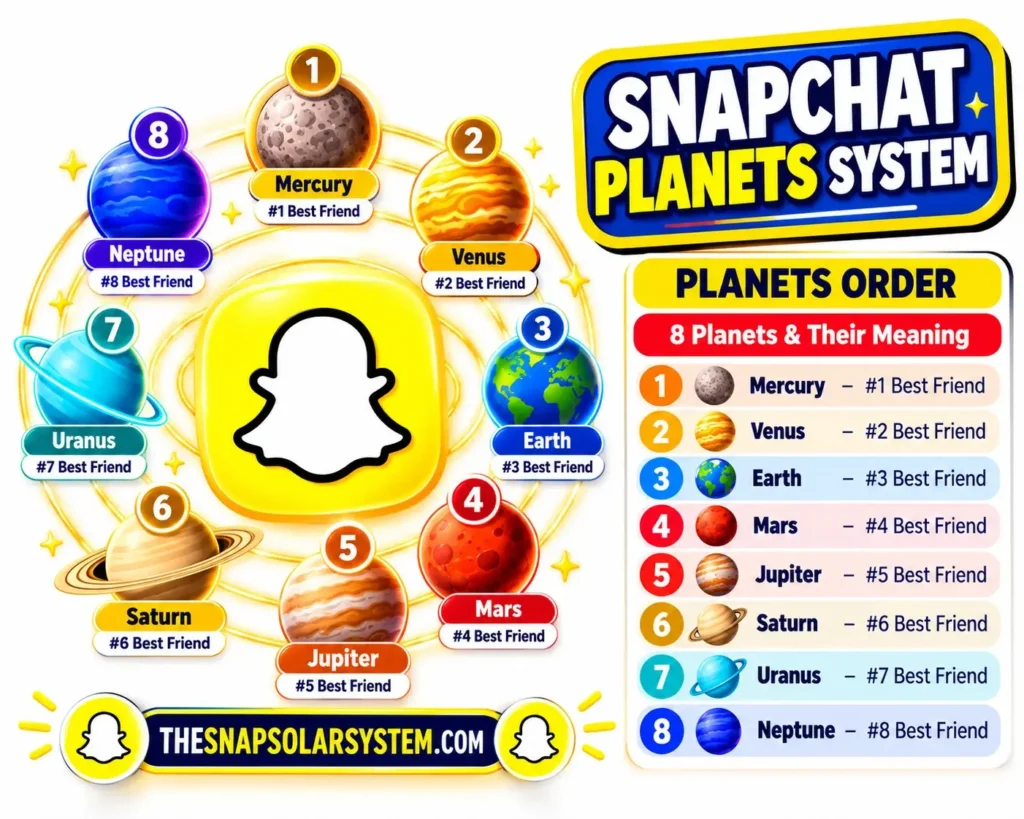
Snapchat Planets show where you rank among your friend’s eight closest friends on Snapchat. Mercury means you’re their #1 best friend, while Neptune means you’re #8. You can see your planet using the Snapchat+ Friend Solar System.

Introduction
Snapchat Planets are part of Snapchat+’s Friend Solar System, a feature that shows where you rank among a friend’s eight closest friends. The planets follow this order: Mercury, Venus, Earth, Mars, Jupiter, Saturn, Uranus, and Neptune. Mercury means you’re their #1 best friend, while Neptune means you’re #8. Your position depends on how you rank in their Best Friends list, which is based on Snapchat interactions like Snaps and Chats.
If you’ve spotted a planet on Snapchat and aren’t sure what it means, this guide will help you figure it out. You’ll learn how to identify all eight planets by their colors and appearance, what each ranking means, and how to find your own planet. We’ll also explain how the Friend Solar System works, how to use our Snapchat Planets tool, and what Snapchat+ offers.
Quick Facts About Snapchat Planets
What are the Snapchat Planets?
Snapchat Planets is a feature for Snapchat+ subscribers that shows where you rank among a friend’s closest connections. Snapchat calls it the Friend Solar System. It uses eight planets to represent friendship positions, starting with Mercury for the #1 Best Friend and ending with Neptune for the #8 Best Friend. Each planet follows the same order as our real solar system.
Your position depends on how much you and your friend interact on Snapchat. Regular Snaps, conversations, and other activity can influence friendship rankings, so your planet may change over time. Snapchat doesn’t reveal the exact formula it uses to calculate these positions.
You can explore the Friend Solar System through the Snapchat mobile app with an active Snapchat+ subscription. New subscribers may need to turn on the feature in their settings before viewing planet badges on friendship profiles.
How Does the Snapchat Friend Solar System Work?
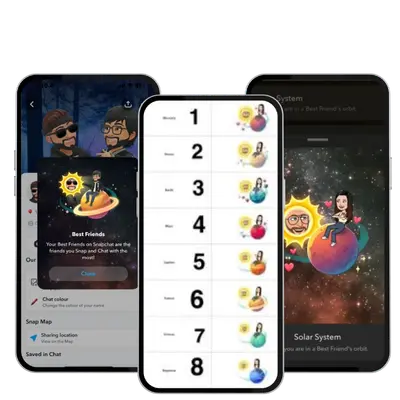
Snapchat Friend Solar System show where your closest friends stand in your personal friendship circle. This feature is part of Snapchat+ and uses your activity with friends to arrange them from closest to less close. You are shown as the Sun, while up to eight friends appear as planets around you, with Mercury representing the closest friend and Neptune representing the eighth position.

How It Works
- Open a friend’s profile: Go to the profile of a friend and look for the friendship badge.
- Check the badge: A Best Friends badge means you both appear among each other’s top eight friends, while a Friends badge means you are in their top eight but they are not in yours.
- Tap the badge: Tapping it reveals your planet position in that friend’s Solar System.
- Check your position: The planet shown tells you how close you are to that person based on your Snapchat activity.
- Keep interacting: Your position can change as your conversations and other interactions with that friend change.
The Friend Solar System is personal to each Snapchat account, so two people can have different rankings for the same friendship. The feature is also private, meaning your planet position is not displayed publicly. Snapchat+ subscribers can manage the Friend Solar System from their Snapchat+ settings.
Do You Need Snapchat+ for Snapchat Planets?
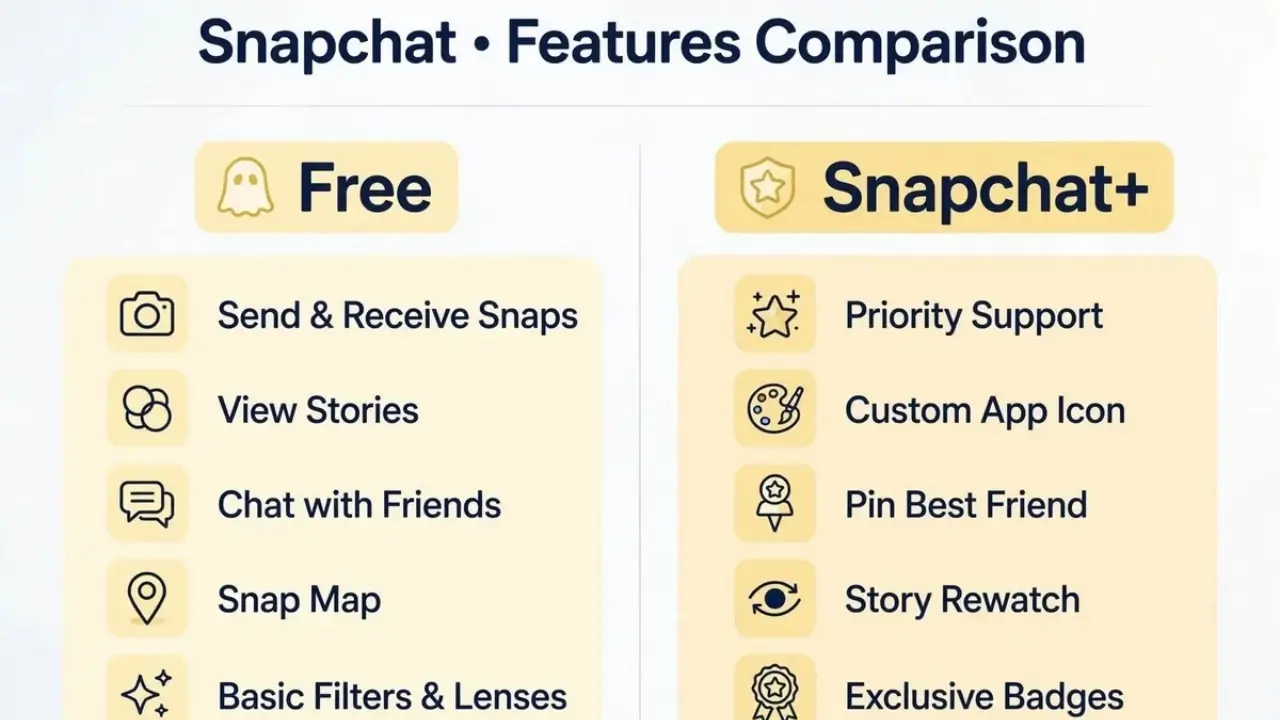
Yes. The Friend Solar System is listed directly on Snapchat’s official Snapchat+ features page alongside other subscriber-only tools like Custom App Icon, Story Rewatch, and the #1 Best Friend pin. There is no way to view it on a free account, and there is no legitimate third-party tool that can show it to you either, since the feature runs entirely inside Snapchat’s own app using your private interaction data.
Find Your Snap Planet 🪐
Estimate your friend’s position in your Snapchat Friend Solar System using your interaction activity.
Your friend’s estimated planet
Mercury
#1 in Your Friend Solar System
Why Was the Snapchat Planets Order Created?
Snapchat created the Friend Solar System to help users see their friendship rankings in a fun and visual way. Instead of showing a basic list, the feature uses planets to represent how closely friends interact on the app.
Here are the main reasons behind the feature:
The feature can also encourage users to stay connected through Snaps and conversations, although Snapchat has not confirmed this as its original goal. Since friendship rankings can feel personal, Snapchat lets subscribers turn the Friend Solar System on or off.
Complete Snapchat Planets Order
Mercury – #1
Venus – #2
Earth – #3
Mars – #4
Jupiter – #5
Saturn – #6
Uranus – #7
Neptune – #8
Easy way to remember the order: My Very Educated Mother Just Served Us Nachos.
My = Mercury, Very = Venus, Educated = Earth, Mother = Mars, Just = Jupiter, Served = Saturn, Us = Uranus, Nachos = Neptune. Same trick used for the real solar system, same order here.
Your position is not necessarily permanent. Snapchat’s Best Friends rankings can change as your interactions and activity with friends change over time.
Snapchat Planets in Order in Detail
There are eight Planets, following the same basic order as the planets in our real solar system. Each one corresponds to a position from #1 to #8 in the Friend Solar System.

1. Mercury
If someone’s Bitmoji shows up on Mercury, that’s as close as it gets on Snapchat. Mercury sits closest to the Sun, which means it marks the #1 spot in that person’s Friend Solar System, the friend they interact with more than anyone else right now.
Visually, it’s shown as a reddish planet surrounded by red hearts. Because rankings shift with recent activity, holding the Mercury spot usually means a steady back-and-forth of Snaps and chats, not just a one-time streak.

2. Venus
Venus takes the #2 position, just one step behind Mercury. It appears as a light brown or beige planet with a mix of pink, blue, and yellow hearts around it.
Being someone’s Venus still puts you firmly in their closest circle, the gap between #1 and #2 is often just a matter of slightly more frequent Snaps or longer conversations on one side.

3. Earth
Easy to recognize, Earth looks like the real planet: blue and green tones, with hearts, stars, and even a small Moon around it. Landing on Earth means #3 in that Friend Solar System.
It’s a solid, active friendship position, just not quite at the level of daily back-and-forth that Mercury or Venus represents.

4. Mars
Mars marks the #4 spot, shown as a reddish planet with hearts and stars around it. Think of it as a strong friendship that’s active but not constant. If you and a friend snap a few times a week rather than daily, Mars is often where that lands.
It still puts you in their top four, well ahead of the rest of the list.

5. Jupiter
Jupiter holds the #5 position and is displayed as an orange planet with stars around it. This is the midpoint of the Friend Solar System, past the “closest four” but still well within the top eight.
Friendships at Jupiter tend to be steady rather than intense, regular check-ins without the daily streak pressure.

6. Saturn
Saturn’s most obvious feature is its ring, shown in a yellow or golden tone with colorful stars nearby.
Sitting at #6, it usually represents a friend you catch up with here and there rather than every day, enough activity to stay in the top eight, but with more gaps in between.

7. Uranus
Uranus appears greenish or blue-green, often with stars scattered around it, and holds the #7 spot, near the outer edge of the ranking.
If you’re someone’s Uranus, the interaction is lighter and less frequent than the planets ahead of it, but you’re still one of only eight people who made their list at all.

8. Neptune
Neptune is the outermost planet and the #8 position, the last spot in the Friend Solar System. It’s shown as a blue planet farthest from the Sun. Being Neptune doesn’t mean a friendship is fading, it simply means, out of everyone that person interacts with, you’re their eighth most active connection on Snapchat. For context, that still puts you ahead of hundreds of other contacts who didn’t make the list at all.
Remember that being Mercury, Neptune, or any planet in between reflects Snapchat’s friendship-ranking system. It should not be treated as a measure of how meaningful a friendship is in real life.
How Snapchat Calculates Planet Rankings
Snapchat determines your planet position based on how frequently you communicate with a friend. The Friend Solar System follows Snapchat’s Best Friends list, which tracks your closest connections over time. Your position can change as your communication habits change.
Here are the main factors Snapchat officially confirms:
Does Snapchat use other factors? Snapchat hasn’t shared its exact ranking formula or confirmed whether Story reactions, video calls, Snapstreaks, or Snapscore directly affect planet positions. It also doesn’t specify how often planet rankings update. Remember, your position in someone’s Solar System reflects their Best Friends list, so they may hold a different position in yours.
Snapchat Planets vs Snap Score vs Streaks
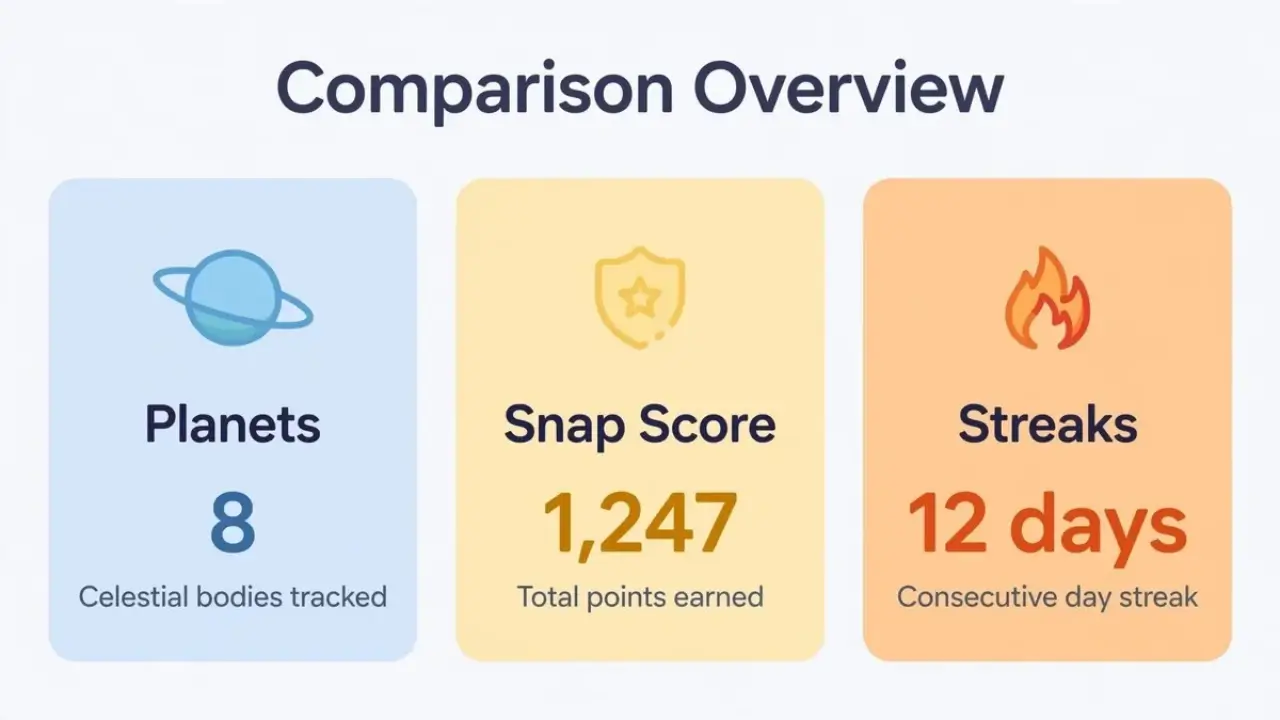
Snapchat uses three different features to show your activity and friendships. Snapchat Planets shows your position on a friend’s Best Friends list, Snap Score reflects your overall Snapchat activity, and Snapstreaks track how many days you keep exchanging Snaps. Each feature serves a different purpose.
Here’s how they compare:
Does a higher Snap Score or longer Streak improve your planet ranking?
Not necessarily. Snapchat bases its Friend Solar System on Best Friends rankings, which depend on how often people Snap and Chat. Having a high Snap Score or a 500-day Streak doesn’t automatically make someone your Mercury. Snapchat hasn’t confirmed that either number directly controls planet positions.
What Is Snapchat Plus?
Snapchat+ is a paid subscription that gives users access to extra features, personalized settings, and special friendship tools. One of its most popular features is the Friend Solar System, which lets you check your planet position in a friend’s Best Friends list. The regular Snapchat app remains free, but you need Snapchat+ to access the Planets feature.
Popular Snapchat+ features include:
Snapchat+ offers monthly and yearly subscriptions, while Family, Platinum, and Lens+ plans provide additional options in supported regions. Prices vary by country and device, so check your Snapchat+ settings for the latest cost.
How to buy a Snapchat Plus subscription?
You can subscribe to Snapchat+ directly through the Snapchat app. The available plans and payment options may depend on your device and region.
To Subscribe then open Snapchat on your iPhone or Android device.
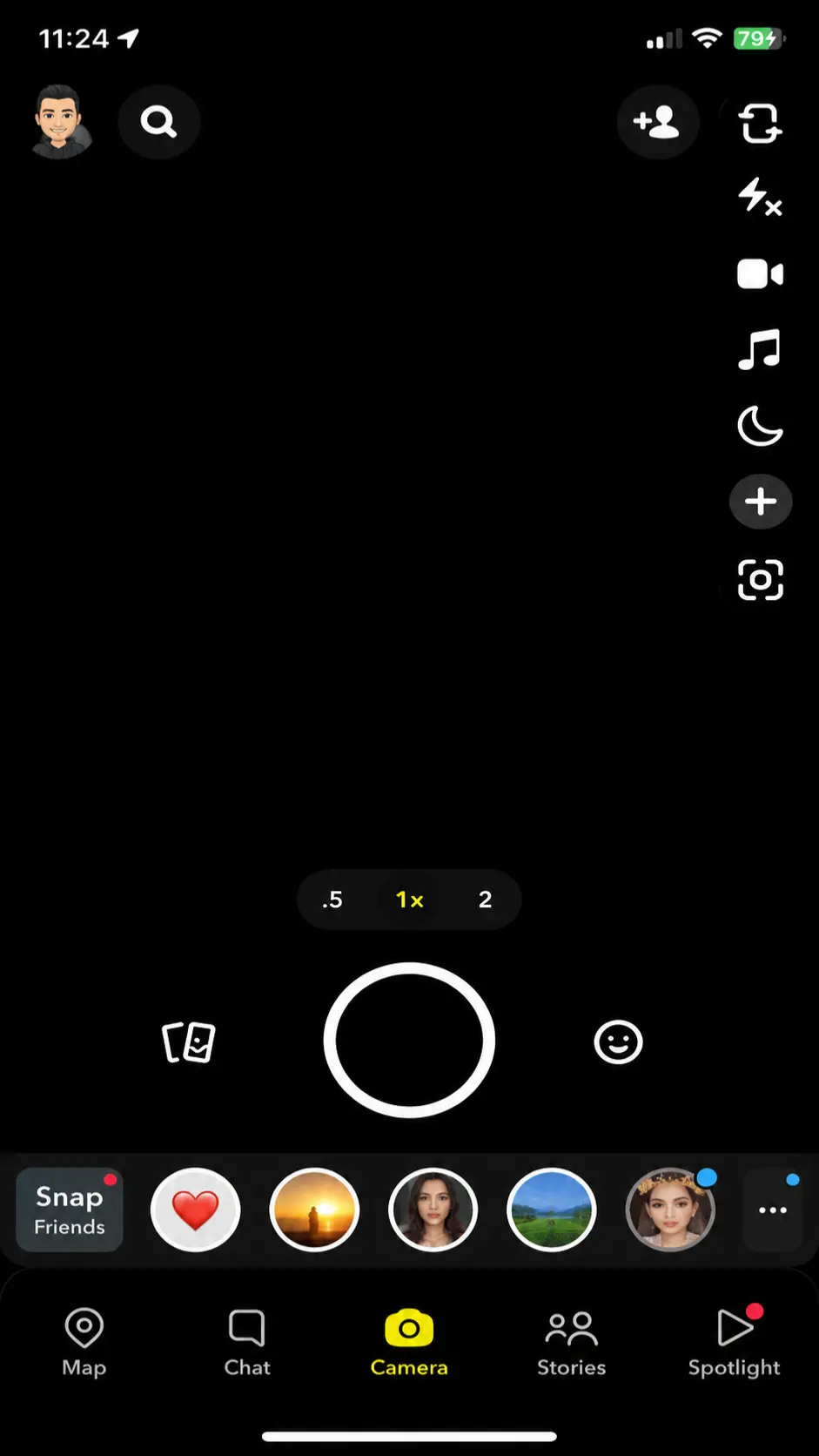
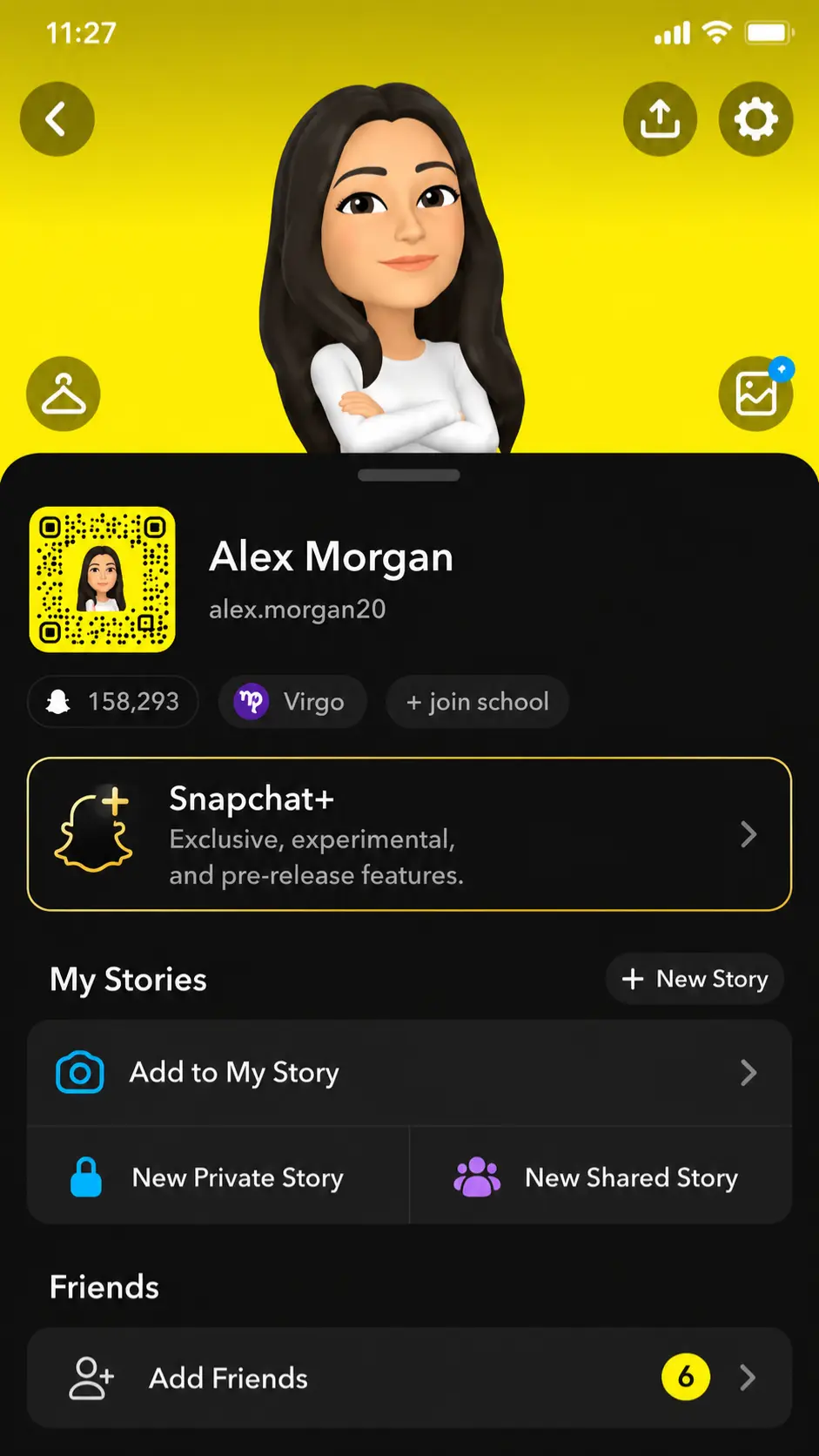
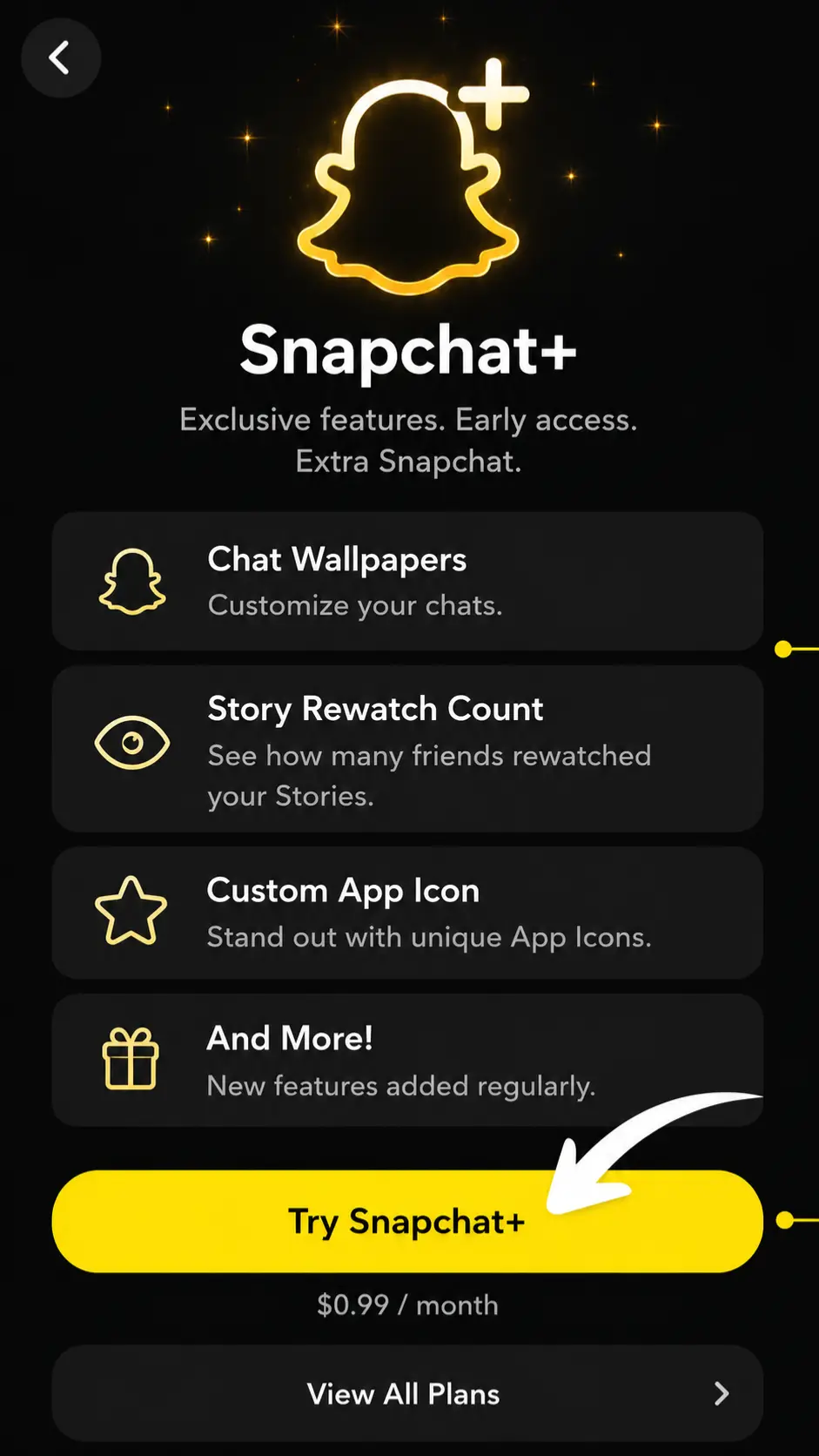
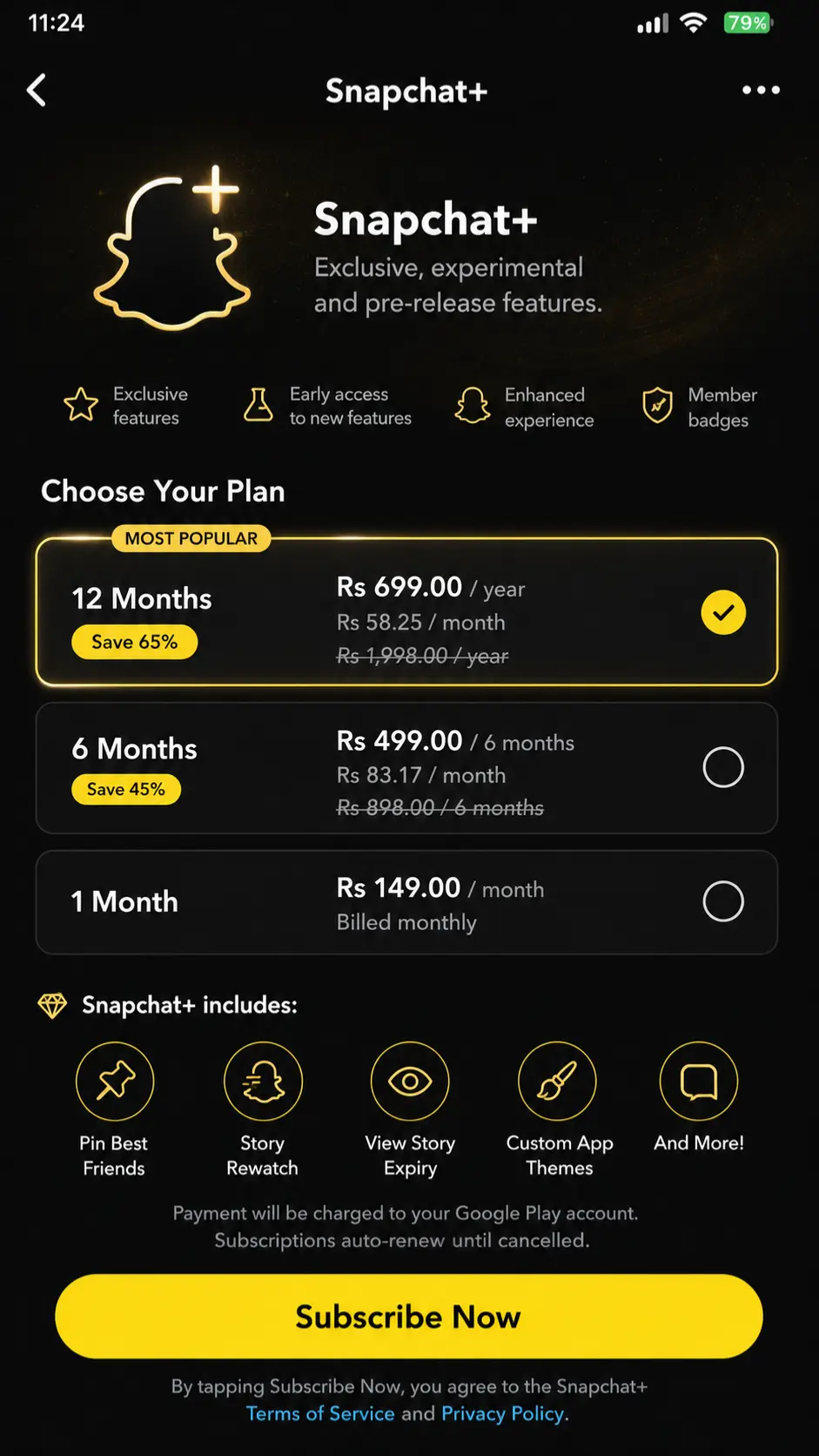
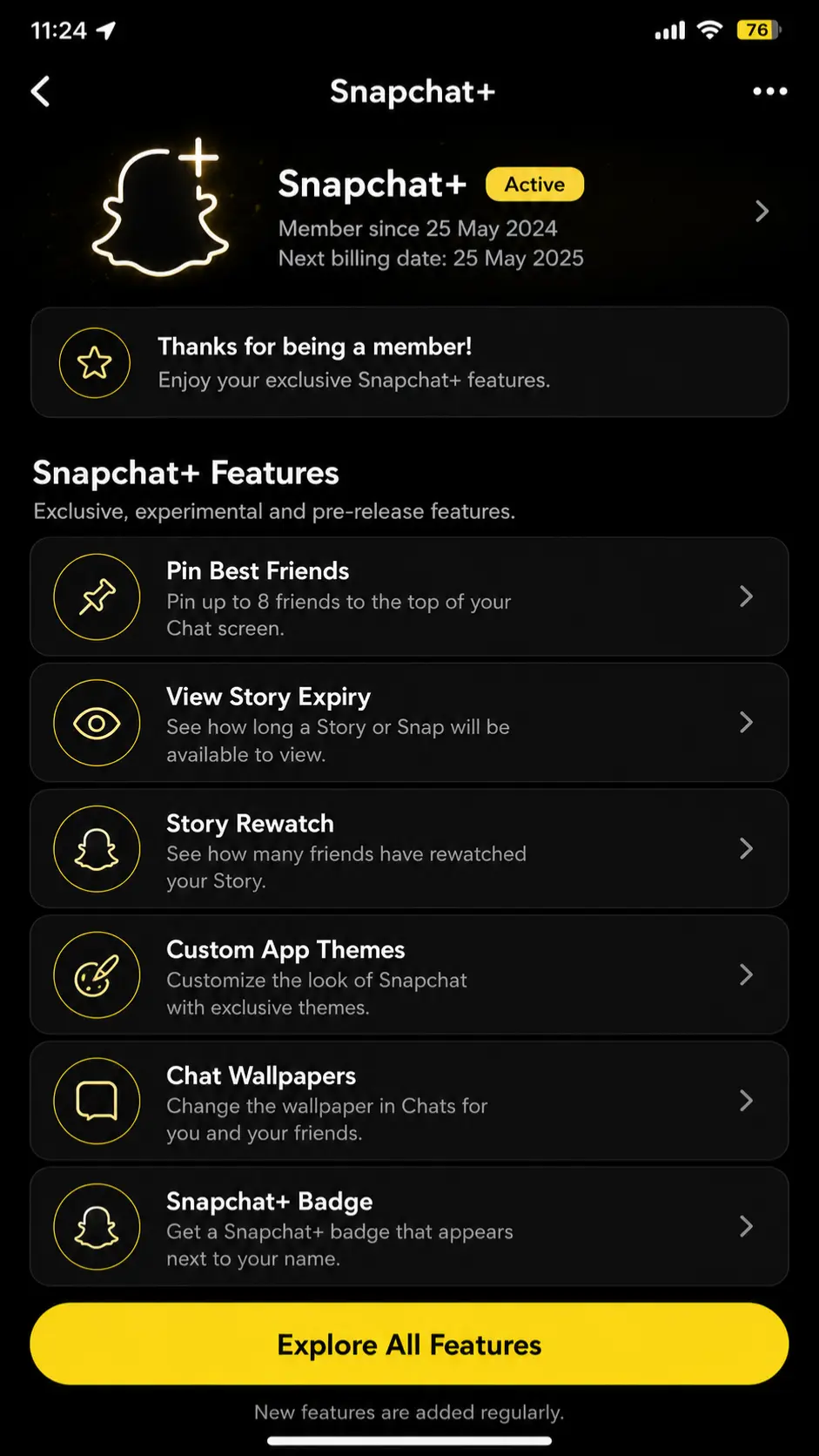
If you want to use Snap Planets, check whether the Friend Solar System is enabled after activating your subscription.
How to Cancel Snapchat+
Snapchat+ billing and cancellation is handled entirely through your device’s app store, not inside Snapchat itself.
On iPhone:
- Open the App Store and tap your profile icon.
- Tap Subscriptions.
- Select Snapchat+.
- Tap Cancel Subscription and confirm.
On Android:
- Open the Google Play Store and tap your profile icon.
- Go to Payments & subscriptions, then Subscriptions.
- Select Snapchat+.
- Tap Cancel subscription and confirm.
Your Snapchat+ features, including the Friend Solar System, typically stay active until your current billing cycle ends. After that, the planets and other subscriber-only features disappear until you resubscribe.
Snapchat Friend Emojis and How They Relate to Planets
Planets are not the only way Snapchat shows friendship strength. The classic Friend Emoji system, confirmed directly on Snapchat’s support pages, still runs alongside the Solar System:
|
Emoji |
Name |
Meaning |
|---|---|---|
|
💛 |
Besties |
You are each other’s #1 Best Friend |
|
❤️ |
BFF |
You have been each other’s #1 Best Friend for two weeks straight |
|
💕 |
Super BFF |
You have been each other’s #1 Best Friend for two months straight |
|
😊 |
BFs |
They are one of your Best Friends, but not your #1 |
|
😬 |
Mutual Besties |
Your #1 Best Friend is also their #1 Best Friend |
|
😎 |
Mutual BFs |
One of your Best Friends is also one of theirs |
|
🔥 |
Streak |
You are on an active Snap streak together |
|
🎂 |
Birthday |
It is their birthday, based on what they entered in their profile |
If someone shows up as your Mercury in the Snapchat Solar System, there is a good chance you will also see the yellow heart Besties emoji next to their name, since both are pointing at the same thing, you are each other’s #1 Best Friend.
Can You Use Snapchat Planets Without Snapchat+?
There is no permanent free way to access the Friend Solar System, it is locked behind an active Snapchat+ subscription. That said, there are two limited ways people commonly get a look at it without an ongoing payment:
What to avoid: Any website, app, or “Snapchat Planet checker” that claims to reveal your planet ranking for free, without you or your friend having an active Snapchat+ subscription, does not actually work. At best these are non-functional gimmicks. At worst they are designed to collect your Snapchat login details. Never enter your Snapchat username or password into a third-party site or app for this.
How to Check Your Snapchat Solar System?
If you want to find out which planet represents your position in a friend’s Solar System, follow these steps:
- Open the Snapchat app.
- Go to the Chat screen and select your friend.
- Tap their Bitmoji or name to open the friendship profile.
- Look for the relevant friendship badge on their profile.
- Tap the badge to open the Friend Solar System view, if available.
- Look at the planet shown with your Bitmoji.
- Match that planet with the order from Mercury (#1) to Neptune (#8).
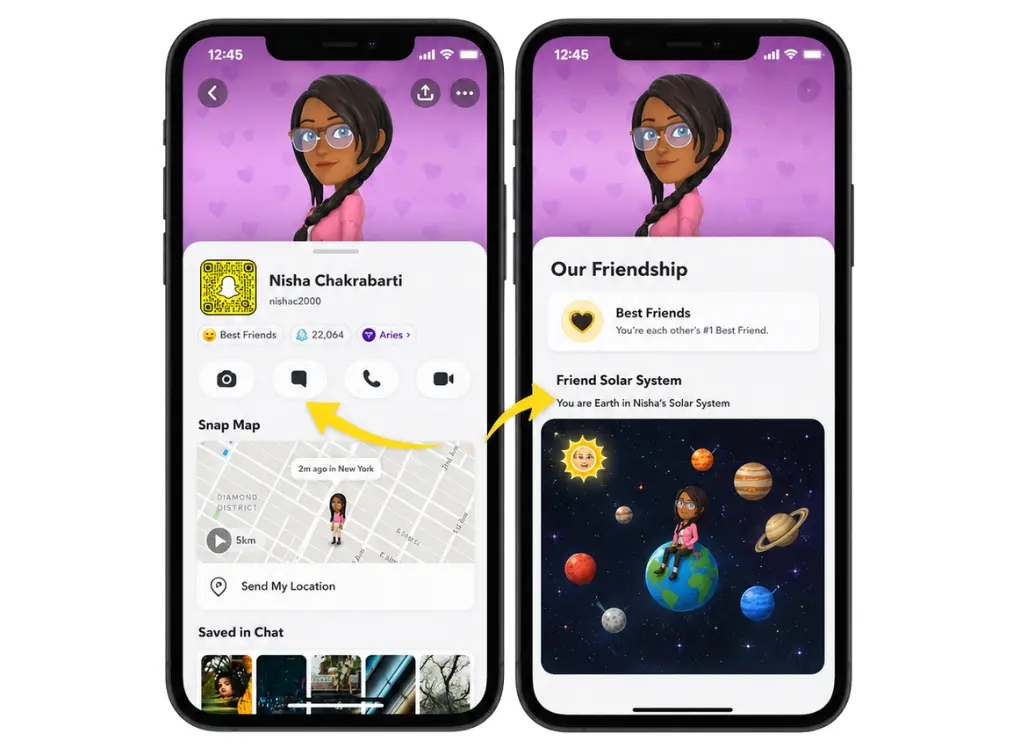
For example, Mercury represents position #1, Earth represents #3, and Neptune represents #8.
If you cannot see a planet, check whether you have access to Snapchat+, whether the Friend Solar System is enabled, and whether the friendship currently qualifies for a planet to be displayed.
Why Did My Snapchat Solar System Change Without Me Doing Anything?
This is one of the most confusing moments for Snapchat+ users. You check a friend’s Friend Solar System one day and you’re Mercury, and a few weeks later you’ve dropped to Earth or Mars, even though you feel like nothing changed on your end. The truth is, something usually did change, just not on your side.
Here’s what actually moves the needle:
The key thing to remember: your Snapchat Planet position isn’t a fixed score, it’s a constantly shifting comparison against everyone else in that person’s activity. Ranking movement is normal and doesn’t always mean the friendship changed.
Do You and Your Friend See the Same Planet?
No, and this surprises a lot of people the first time they compare notes with a friend. Every Friend Solar System is personal. Your planet position for someone is based entirely on your own Snapchat activity with them, not a shared or mutual calculation.
That means:
There’s no way to “sync” or compare planets directly inside the app. If you want to know where you stand with someone, the only way is to check their profile yourself, and understand that what you see reflects your activity, not theirs.
Snapchat Best Friends List vs Snapchat Planets
The Snapchat Best Friends list system and Snapchat Planets are closely connected, but they are not exactly the same feature. The Best Friends list system identifies people you interact with frequently on Snapchat. The Friend Solar System adds a visual layer to this concept by representing positions using planets from Mercury to Neptune.
The main difference is presentation. Instead of only relying on traditional friendship indicators, Snapchat+ users can use the Friend Solar System to understand a position through a planet. Mercury corresponds to #1, Venus to #2, and the order continues until Neptune at #8.
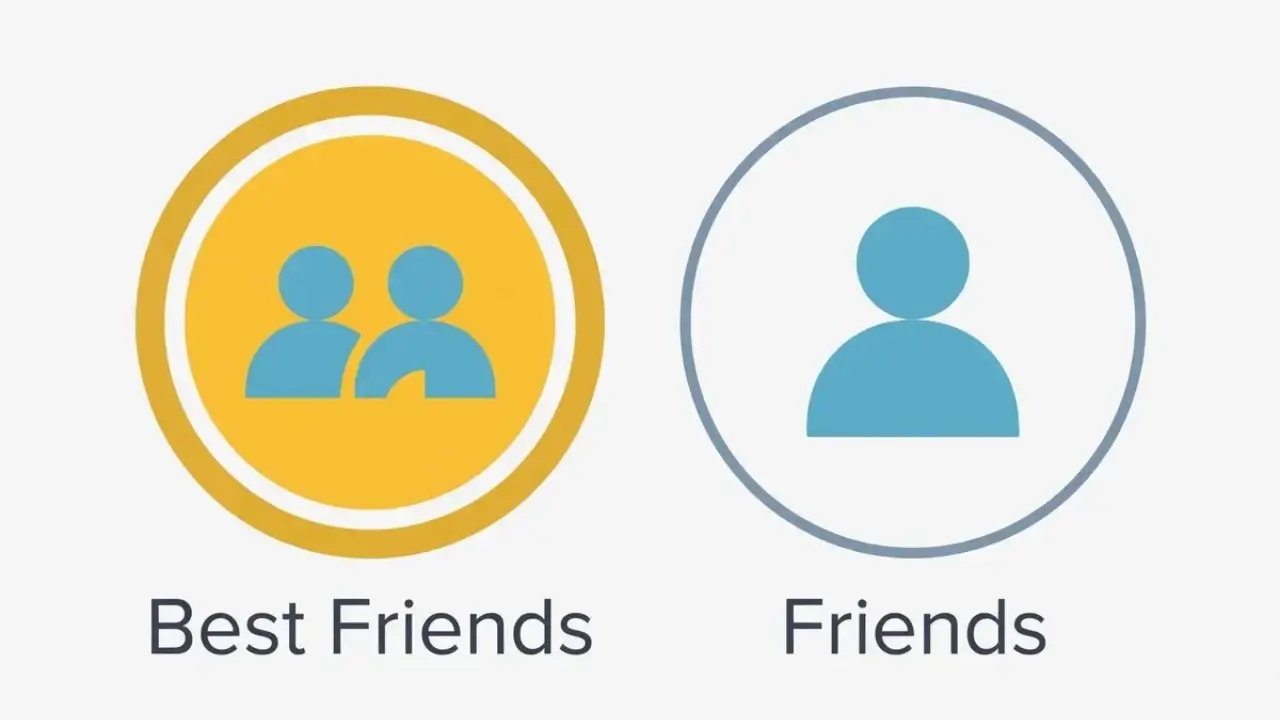
Difference between Best Friends and Friends badges?
Friendship badges can help Snapchat+ users understand their relationship within the Friend Solar System. However, Snapchat’s interface and badge presentation can change as the app is updated, so older guides and screenshots may not always match what you currently see.
Best Friends Badge
A Best Friends badge is associated with a close Snapchat friendship based on the app’s Best Friends system. When the Friend Solar System is available for that friendship, interacting with the badge may reveal a planet and its corresponding position.
Friends Badge
The Friends badge has historically been used to indicate a different friendship relationship within the Solar System system, including situations where the Best Friends relationship is not mutual.
Because Snapchat has changed how badges are displayed over time, it is best to use the planet revealed through the current app interface rather than relying entirely on an older badge screenshot or description.
Is Snapchat good for Younger Users?
Snapchat offers creative ways for younger users to communicate with friends, but features that visually rank friendships can also create social pressure. A user may feel disappointed after discovering that they are Neptune instead of Mercury in a close friend’s Solar System. However, a Snapchat Planet reflects an in-app ranking, not the true quality or importance of a real-world friendship.
This is one reason the Friend Solar System should be treated as a fun social feature rather than a friendship scorecard. Parents and younger users should also make use of Snapchat’s available privacy and safety controls and avoid placing too much importance on changing planet positions.
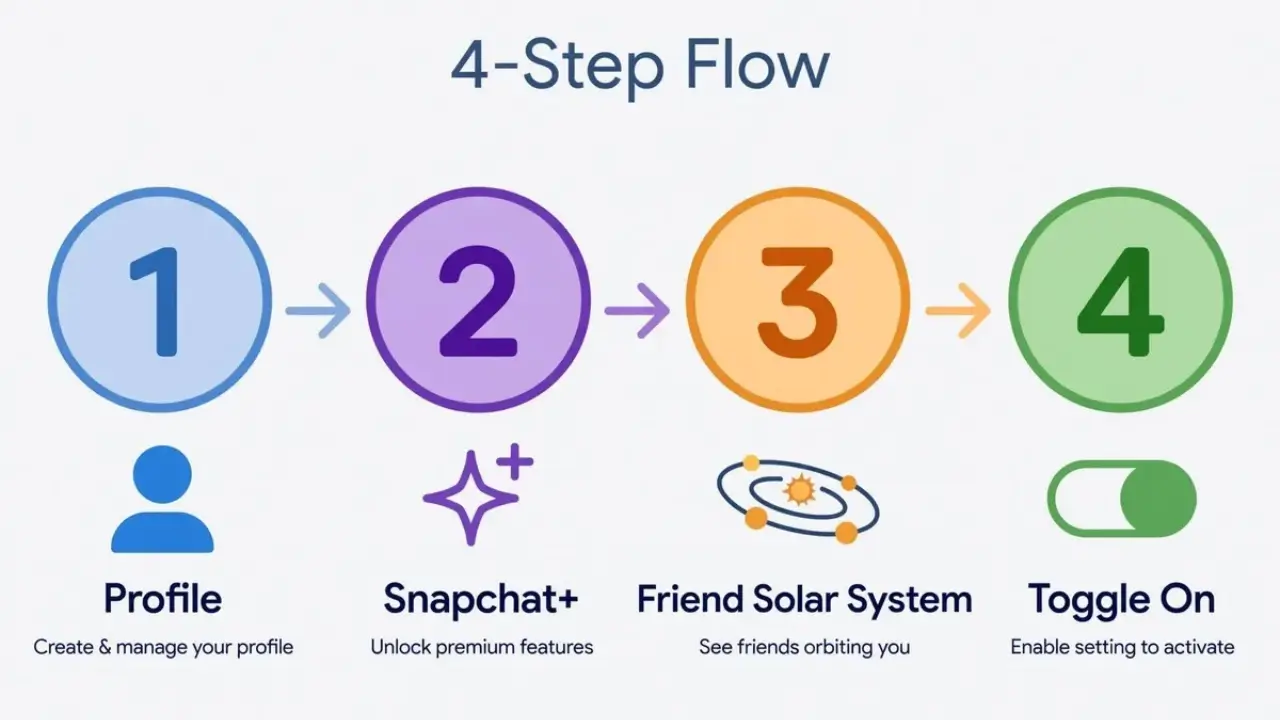
How to Enable the Snapchat Friend Solar System?
If you have access to Snapchat+ but cannot see Snapchat Planets, the Friend Solar System may need to be enabled.
Follow these steps:
- Open Snapchat.
- Tap your Bitmoji or profile icon.
- Open the Snapchat+ section.
- Find the Friend Solar System option among the available features.
- Turn the feature on.
- Confirm the change if Snapchat displays a confirmation message.
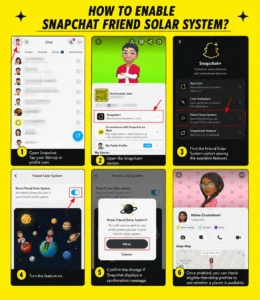
Once enabled, you can check eligible friendship profiles to see whether a planet is available.
How to Disable Friend Solar System on Snapchat?
You can turn off the Friend Solar System if you no longer want to use Snapchat Planets.
- Open Snapchat and go to your profile.
- Open the Snapchat+ section.
- Find a Friend Solar System.
- Turn the toggle off.
- Confirm your choice if prompted.
Disabling the Friend Solar System does not necessarily mean you have canceled your Snapchat+ subscription. It simply turns off that particular feature.
Why Some Users Disable the Snap Solar System
Some users choose to disable Snapchat Planets because they:
Your Snapchat Planet should be viewed as an app feature rather than a measure of your importance to another person.
Why Can’t I See Snapchat Planets? (Troubleshooting)
If you open a friend’s profile and don’t see a planet at all, it’s usually one of a few common issues rather than a bug specific to your account.
Check these in order:
- Confirm your Snapchat+ subscription is active: The Friend Solar System is a paid-tier feature only, and an expired subscription silently disables it.
- Check the feature toggle in Snapchat+ settings: Even with an active subscription, the Friend Solar System has to be manually turned on. It doesn’t activate automatically.
- Make sure the friend qualifies for a ranking yet: If you haven’t interacted enough for Snapchat to place them in your top eight, no planet will appear for that profile.
- Update the app: Older versions of Snapchat sometimes don’t render newer Friend Solar System features properly.
- Restart or clear the app cache: Temporary glitches are common after app updates and usually clear up after a restart or a log-out/log-in cycle.
- Give it time after enabling: The feature can take a short while to populate rankings the first time it’s switched on.
If you’ve checked all of the above and planets still aren’t showing, the feature may simply not have rolled out to your account yet, since Snapchat sometimes releases updates gradually rather than to everyone at once.
How to Improve Your Snapchat Planet’s Ranking
Want to move from Neptune or Jupiter closer to Mercury in your friend’s Snapchat Solar System? The best approach is to stay in touch more often. Snapchat ranks Best Friends based on how frequently people Snap and Chat, so regular communication may help your position improve over time.
Try these simple tips:
Common Myths About Snapchat Planets
Many Snapchat users misunderstand how the Friend Solar System works. Some believe longer Streaks guarantee better rankings, while others think they can choose their planets or view everyone’s friendship positions. Here’s what you should know.
The bottom line: Snapchat Planets reflects communication patterns, not a permanent measure of friendship. Your position can change over time, and a lower planet doesn’t mean someone values you less.
Pros and Cons of Snapchat Plus Planets
Final Words
Snapchat Planets turn the Friend Solar System into a visual ranking experience, with eight planets representing positions from Mercury at #1 to Neptune at #8. Once you understand the order, it becomes much easier to recognize what your assigned planet represents when viewing an eligible friendship profile.
The most important thing to remember is that a Snapchat Planet represents an in-app friendship position, not the true value of a relationship. Rankings can change over time, and Snapchat does not publicly reveal an exact formula for calculating every position. Whether you appear as Mercury, Earth, or Neptune, treat the Friend Solar System as a fun Snapchat+ feature rather than a score for your real-life friendships.